The next crucial thing you can do is develop and preserve a strong relationship with your child's teachers and with the school. If your child has been identified with a psychological or behavioral health problem, bring it to the school's attention and ensure they are involved in your treatment plan.
If the school declines to work with you or isn't able to offer anything in the way of help, it might be time to look for another school that better matches your kid's requirements. By bringing your pediatrician and your kid's instructors together, you can develop a detailed support group for your kid.
Though the roadway might be challenging, your child depends on you for love and assistance so do whatever you can to offer your kid what they need to be successful and grow.
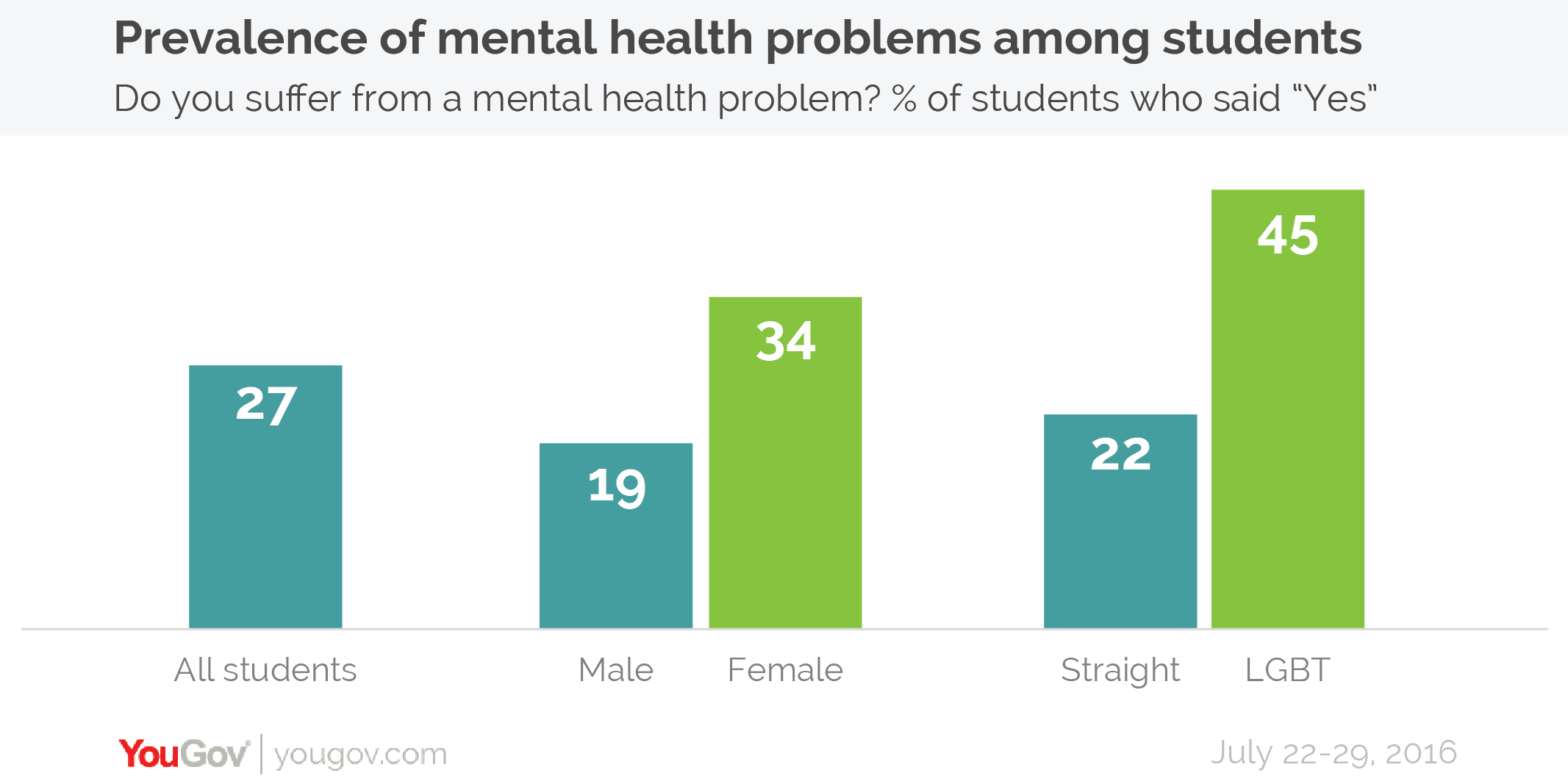
A U.S. Cosmetic surgeon General report suggests that a person in five kids and teenagers will deal with a significant psychological health condition during their academic year. Psychological health conditions impacting kids and teenagers can vary from attention deficit hyperactivity condition (ADHD) to autism, depression, eating disorders, schizophrenia, and others. Trainees struggling with these conditions face significant barriers to learning and are less likely to finish from high school.
Excitement About How Does Food Insecurity Affect Mental Health
As leaders work to satisfy these duties, they deal with a variety of obstacles connected to psychological health: Schools have historically used their resources to use a considerable number of student support professionals - how does mental health affect college students. These school personnel members have been the core around which thorough school-based programs have actually been developed and executed.
By the 201415 academic year, there was one school counselor for every 482 students. The suggested ratio from the American School Counseling Association is one school counselor for every 250 students. Data from the U.S. Department of Education Workplace for Civil liberty indicates that one in 5 high schools lack a school counselor.
Within Click here for info a district, numerous schools need to share school psychologists, school social workers, school nurses, and other customized support personnel. This increases the caseload of these psychological health professionals and limitations access to their services for students in requirement of support and assistance. While the People with Disabilities Act (CONCEPT) and the Elementary and Secondary Education Act (ESEA) include programs and initiatives to address thorough assistance services in schools, because FY 2009 the funding for these programs, including the Safe and Drug-Free Schools and Communities Act (SDFSCA) State and Local Grants Program, has been severely cut, if not gotten rid of.
In FY 2009, the federal programs supporting trainees' psychological health and health surpassed Learn here $800 million; however, in FY 2017, Congress was investing just $400 million to support Title IV and the SSAE grant program, less than 25% of its authorized level of $1.65 billion under the Every Trainee Succeeds Act (ESSA).
About How Does Social Class Affect Mental Health
For unfortunate historic and cultural factors, mental disorder has persistently been stigmatized in our society. This stigma appears by bias, wonder about, stereotyping, fear, humiliation, anger, and/or avoidance. Addressing psychosocial and psychological health concerns in schools is typically not designated a high concern, except when a high-visibility event takes place, such as a shooting on school, a student suicide, or an increase in bullying.
According to the Union to Assistance Grieving Trainees, death by suicide is the third leading cause of death in kids ages 1014 and the 2nd leading cause of death in kids ages 1519. Near one in 5 high school trainees has thought about suicide, and 2 to 6 percent of kids try suicide.
Principals and other school staff should also focus on preventative procedures for causes that are connected to suicide, such as bullying. These difficulties highlight the requirement for detailed mental health support services and prevention programs to develop the capability of schools as they help each student reach his/her maximum potential.
As a 2017 research evaluation in the Harvard Review of Psychiatry asserted, there is a growing body of proof that supports the effectiveness of mental health programs in schools and their capability to reach great deals of children. NASSP https://gumroad.com/bertyndats/p/the-basic-principles-of-relationships-and-mental-health thinks, and current research has actually confirmed, that school management affects trainee achievement (second just to guideline, especially for at-risk students) (how does prison affect mental health).
Not known Details About How Can Being A People Pleaser Affect Mental Health
Structure Ranks: A Detailed Framework for Effective School Leaders includes "health" as a dimension of structure culture, mentioning that school leaders "foster and nurture an intentional focus on wellness since healthy students and adults discover and connect proficiently." NASSP believes that for schools to promote a safe learning environment for all trainees, including those trainees that may be suffering from some type of mental disorder, policymakers should provide appropriate levels of access to psychological health and therapy services for all trainees who attend our public schools, in order to promote success in school and to deal with the mental health needs of trainees struggling with some form of diagnosable psychological health problem.
NASSP is committed to supporting principals and other school leaders in their work to prevent teen suicide, while also offering principals, school leaders, and schools with resources and guidance for dealing with teen suicide in the regrettable event that it happens within a school neighborhood. NASSP recognizes that, in addition to detected mental health problem, today's middle level and high school students frequently face a myriad of undiagnosed psychological health issues such as stress and stress and anxiety, anxiety, drug and alcohol abuse, consuming disorders, sleep deprivation, disruptive scenarios in your home, and lack of nutrition.
NASSP thinks concentrated efforts at the local, state, and federal levels to protect funding for resources to support and sustain psychological health programs will address the concern at hand. Federal and state federal governments must provide monetary assistance to make it possible for regional communities to implement a comprehensive culturally and linguistically suitable school-based mental health program that supports and cultivates the health and advancement of trainees.
The federal government should give states and regional communities the capability to combine federal and state financing from different firms to address psychological health and school safety concerns at the regional level. The federal government needs to totally fund the Student Support and Academic Enrichment Grants under Title IV, Part A of the Elementary and Secondary Education Act to assist K12 schools supply trainees access to innovative courses and college and profession therapy.
What Does How Does Facebook Affect Your Mental Health Do?
Federal and state policymakers ought to assist schools in recruiting and retaining school therapists, school social workers, school psychologists, and psychological health experts to support school-based interventions and the coordination of psychological health and wellness services. States and regional governments must facilitate community collaborations among families, students, law enforcement agencies, education systems, mental health and substance abuse service systems, family-based psychological health service systems, federal government firms, healthcare service systems, and other community-based systems.
State and local policymakers need to supply funding to support the hiring of mental health specialists to serve trainees and schools. State and local policymakers must provide funding to increase professional advancement opportunities for school leaders and other school staff. State and local policymakers need to supply financing for detailed school-based health centers, especially those that provide psychological health services.